In conversations around artificial intelligence today, OpenAI often stands at the center of attention. https://suprmind.ai/hub/insights/who-owns-chatgpt/ Products like ChatGPT have surged into public consciousness, driving innovation and debate alike. But amid this growing spotlight, a number of persistent myths about who controls and owns OpenAI—and by extension ChatGPT—circulate widely. These myths muddle discussions both inside and outside the tech community, especially when it comes to governance, investor influence, and corporate structure.
Having reviewed everything from the OpenAI Terms of Use (European terms) and its rest-of-world counterpart to the now-public portions of OpenAI’s confidential draft S-1 registration statement process, I'm sharing a comprehensive myth-busting list for your team to reference. Understanding OpenAI’s ownership and control structure correctly is critical as the company approaches what could be one of the largest technology IPOs given the rumored $122 billion committed capital tied to new AI funding rounds.
Key Clarifications: ChatGPT Is Not a Separate Company
First and foremost, it must be clear that ChatGPT is a product of OpenAI, not a standalone entity or spinout. This myth is surprisingly common, especially in reports that try to explain Microsoft's strategic involvement with OpenAI or when the subject of governance and investment ownership arises.
ChatGPT operates entirely under the umbrella of OpenAI Group PBC, the corporate parent entity. To understand why it matters, consider how product development, regulatory compliance, and data governance policies all flow from OpenAI’s central governance model, not a separate ChatGPT entity.
Myth 1: “OpenAI Is Already Public” (the openai already public myth)
There is some buzz claiming OpenAI is already a public company or that it trades on public exchanges under some proxy ticker or shell. This is not true.
OpenAI, through OpenAI Group PBC, remains a privately held public benefit corporation. It has filed a confidential draft registration statement (S-1) with the SEC signaling a potential IPO in the future, but as of now, there is no public trading.
The confidential draft S-1 process is standard for companies preparing for a public offering; however, it does not mean the company is public yet or that financial or ownership details are widely available.
Myth 2: “Microsoft Owns ChatGPT” (the microsoft owns chatgpt myth)
Microsoft’s strategic investment in OpenAI has fueled speculation that Microsoft controls ChatGPT or even OpenAI outright. This is incorrect.
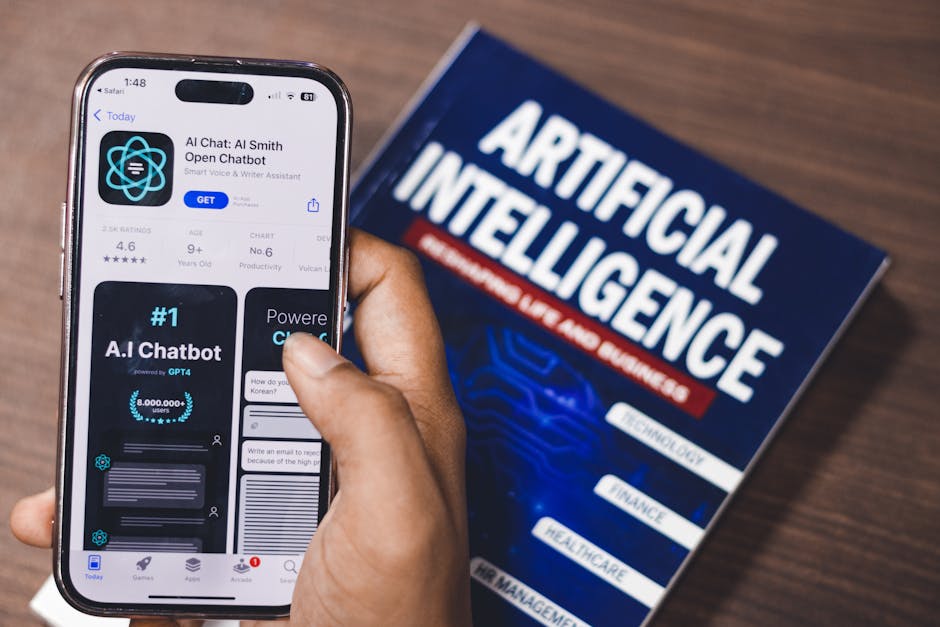
Microsoft is a significant partner and investor in OpenAI, with multi-billion-dollar commitments included in the reported $122 billion of committed capital poured into AI R&D and cloud infrastructure partnerships. Yet economic investment does not automatically equate to operational control or governance authority.
The governance framework differentiates between:
- Operator: The teams building and maintaining ChatGPT and OpenAI’s products Owner: Those with economic stakes or shares in the organization Controller: Those with legal and governance authority to direct strategy and day-to-day operations
Microsoft holds a material ownership stake but it does not function as the controlling owner or operator of the product or company.
Myth 3: “There Is an AGI Kill Switch Controlled by Investors” (the agi kill switch myth)
Another common misconception arises in fears that investors or corporate owners have a “kill switch” that can shut down OpenAI’s AGI (Artificial General Intelligence) work abruptly or unilaterally.
In reality, the governance structure separating economic ownership from control and operational authority means that no single investor or owner can just flip a switch to end AGI research or product delivery.
This is designed to protect long-term scientific objectives and mission alignment grounded in the OpenAI Foundation’s role.The OpenAI Foundation, distinct from OpenAI Group PBC, is the nonprofit entity tasked primarily with preserving the public benefit mission and ethical governance principles. It helps ensure governance continuity and mission adherence independent of shifting economic interests.
Understanding OpenAI’s Corporate Structure: OpenAI Group PBC vs. OpenAI Foundation
To navigate these myths and realities, it helps to understand the roles of the primary entities:
Entity Type Role in Ownership and Governance Relation to Products Like ChatGPT OpenAI Group PBC Public Benefit Corporation (profit-seeking with social mission) Holds economic interests (shares), manages product development and deployment, retains operational control over AI research and related businesses. Direct operator and accountable entity behind ChatGPT and other AI technologies. OpenAI Foundation Nonprofit entity Provides stewardship of public benefit mission and ethical principles, serves as governance safeguard, separate from profit motives. Oversees mission adherence but does not operate or own AI products commercially.Economic Ownership vs Governance Control
It’s a nuanced but fundamental point that having money invested (economic ownership) is not synonymous with having legal authority over the company’s decisions or product direction (governance control).
In OpenAI’s case, the governance structure attempts to balance access to capital and innovation funding with dedicated mission oversight designed to limit undue external control risks.
- Economic ownership includes Microsoft and other investors providing capital—these rights usually include returns on investment and influence via shareholder agreements. Governance control lies primarily with the board of directors and leadership chosen under the public benefit corporation bylaws and supervised by the Foundation’s governance watchdog mechanisms. Operator roles consist of the research, engineering, and product teams who develop ChatGPT and other AI tools, but who do not typically hold ownership stakes.
Why These Distinctions Matter for Teams and Stakeholders
For communication teams, operators, policy advocates, and investors alike, mixing up these distinctions leads to confusion that can impact strategy, media narratives, and public trust.
When your team understands:
- That ChatGPT is not its own company, but rather a product of OpenAI Group PBC How investor commitments—including Microsoft's sizable funding contributing to $122 billion in overall AI-related fund pools—translate to influence but not total control How the OpenAI Foundation serves as a nonprofit mission guardian independent from capital economics The difference between operators, owners, and controllers, mitigating simplistic “kill switch” or “hostile control” fears
you can better prepare messaging, governance guidelines, and stakeholder outreach initiatives.
Summary: Myth-Busting Table for Quick Reference
Myth Reality OpenAI is already public. OpenAI has filed confidential draft S-1 for IPO but remains private. Microsoft owns ChatGPT. Microsoft is a large investor but does not control OpenAI or ChatGPT operations. There is an investor-controlled "AGI kill switch." Governance and mission safeguards separate ownership from sudden program shutdowns. ChatGPT is a separate company. ChatGPT is an OpenAI product under OpenAI Group PBC’s operational control.Additional Resources
For those interested in diving deeper, here are key documents and links for your research and team education:

- OpenAI Terms of Use (European version) OpenAI Terms of Use (Rest of World) SEC filings portal (once the OpenAI S-1 is public) OpenAI Charter and Governance Documentation
Clearing up these misunderstandings can help internal communications teams confidently address questions from colleagues, customers, and media alike. OpenAI remains a unique hybrid structure pioneering new models of AI governance, and understanding its ecosystem correctly is key for effective conversation in an evolving landscape.
Author’s Note: Having covered venture financings, cap tables, and governance quirks for over a decade, my aim is to keep operator and comms teams well-informed on these highly technical but important nuances shaping AI’s future.